Level 17, 111 Elizabeth Street, Sydney NSW 2000
Level 17, 111 Elizabeth Street, Sydney NSW 2000
Airway & Sleep · Jaw Health
Frequent headaches are common, never normal. How night-time clenching, jaw dysfunction and airway problems drive headaches, and what treatment involves.
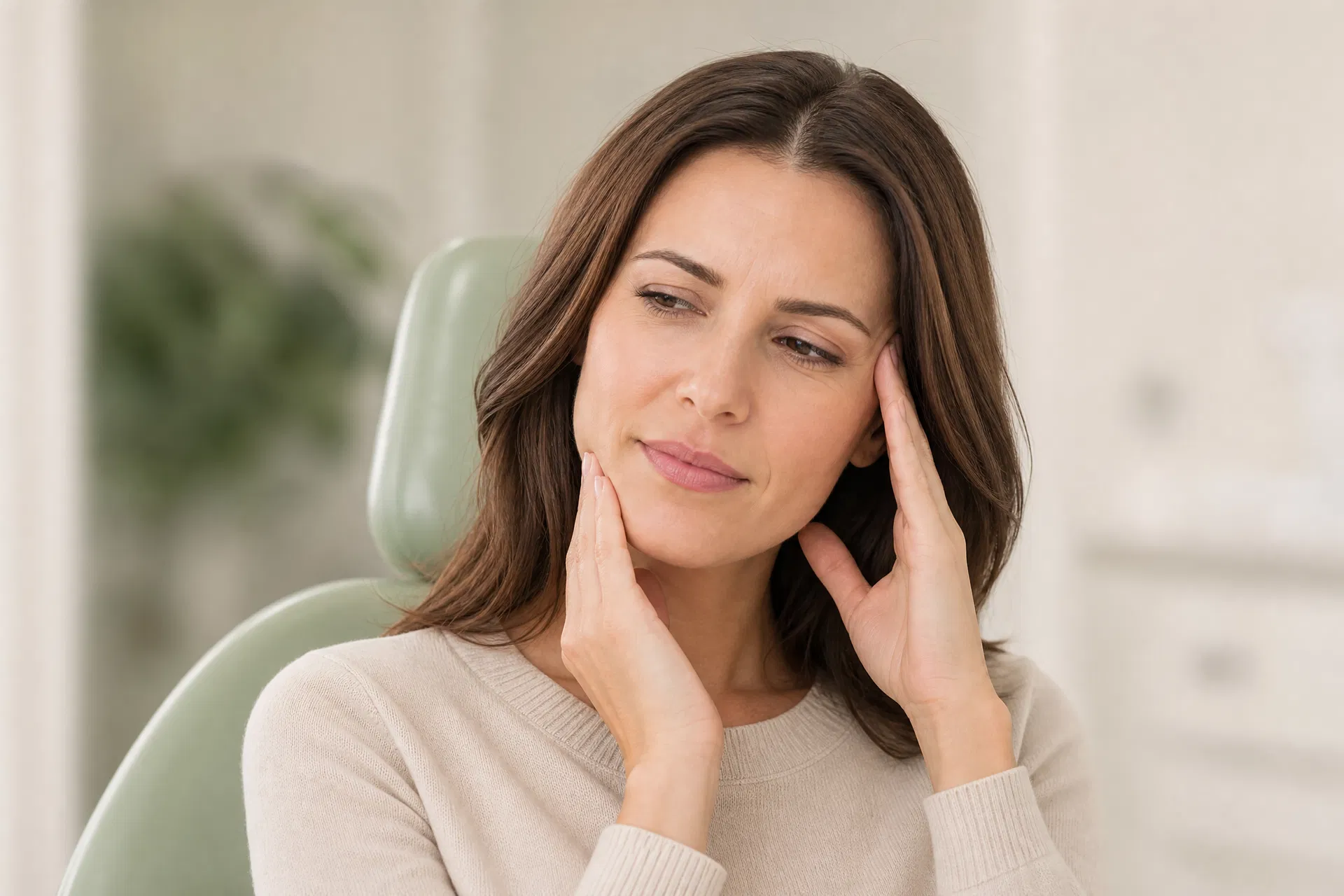
Headaches are common. They are not normal, and when they arrive most mornings, sit in the temples or behind the eyes, and travel with a tight jaw or aching neck, the overlooked cause is frequently dental: night-time clenching and grinding, jaw joint dysfunction, and in many cases the sleep-disordered breathing that drives the clenching in the first place. Sydney Holistic Dental Centre assesses that whole chain, because treating the headache without finding its engine books the next one.
Understanding the mechanism
Clench your teeth now and touch your temples: the muscle that bulges is the temporalis, one of the chewing muscles, and it wraps much of the side of your head. Grind and clench for hours each night and those muscles wake exhausted and inflamed, reporting as a tension headache. Add an overloaded jaw joint referring pain toward the ear, and neck muscles bracing against poor night-time posture, and you have the pattern patients describe as 'headaches that start before the day does'. Painkillers quieten the report; they do not stop the overnight work shift.
What we assess

The brain's response to a narrowing night-time airway includes jaw thrusting and grinding; in our experience the majority of significant bruxism has an airway story behind it.
Existing pain provokes clenching, which creates more pain; long-standing cases need the loop broken, not lectured.
Stress shows up in the jaw at night with remarkable reliability; we ask honestly and without prying.
Missing teeth, uneven contacts, and TMJ dysfunction concentrate forces the muscles must manage.
At the chair
A structured examination of the head and neck muscles, jaw joints (clicking, locking, range of movement), tooth wear as a record of night-time behaviour, bite contacts, sleep and airway screening, and posture. Where the pattern points beyond us — migraine, neurological features, uncontrolled blood pressure — we say so and refer; dentistry claims its share of headaches, not all of them, and your GP stays in the loop.
Dentist with patient doing a jaw assessment image
Breaking the cycle

A custom night-time appliance that decompresses the joint, interrupts the grinding pattern and lets muscles recover. Which design depends on your diagnosis; the options are detailed on our TMJ & Bruxism page.
Treating the breathing that drives the clenching, from retraining through to appliance therapy co-managed with a sleep physician.
Physiotherapists, chiropractors and osteopaths we work alongside for the neck and posture share of the problem.
Headache frequency tracked, wear monitored, splint adjusted; relief you can count, not just recall.

"The sentence I hear most in these cases is 'I've had headaches for years and no one ever looked at my jaw.' We are often the last stop, and the frustrating truth is we should usually have been the first."
DR YIN YIN TEOH — PRINCIPAL DENTIST
Image of
Dr Yin Yin
Common Questions
How do I know if my headaches are dental?
The suggestive pattern: worst in the morning, temples or behind the eyes, jaw or neck tightness alongside, worn or flattened teeth, a partner who hears grinding. The assessment confirms or excludes it properly.
Will a splint stop my headaches?
Where night-time clenching is the driver, a correctly designed splint frequently reduces headache frequency markedly, and we track that with you. Where it is not the driver, we say so and point you to the right practitioner instead of selling you plastic.
Why not just take painkillers?
Relief has its place; as a strategy it treats the report and ignores the cause, and frequent analgesic use creates its own rebound-headache problem, which your GP can advise on.
Could it be migraine instead?
It could, and the two coexist. Migraine has its own features and its own medicine; our job includes recognising it and referring rather than stretching a dental explanation over it.
Book a new patient consultation and we will assess the full picture — jaw, airway, posture and bite.
Dr Yin Yin
image
Dr Yin Yin Teoh
Principal Dentist
Dr Yin Yin Teoh practises at Sydney Holistic Dental Centre with a focus on airway, sleep and jaw health. She leads the practice's airway and sleep-disordered breathing programme.